


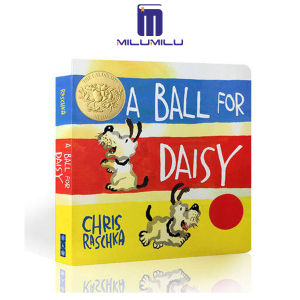
A Ball for Daisy: (Caldecott Medal Winner) Board book – Picture Book by Chris Raschka Original English books
What Should Children Do When They Lose Their Beloved Things?
The Inspiration of This Book Comes from the Author's Son. When My Son Was 4 Years Old, He Once Had a Beloved Ball, but It Was Accidentally Broken by the Dog. My Son Was Very Sad and Depressed, this May Be a Time When He Experienced the Feeling of Losing Something He Loved Deeply-He Lost It and Could Never Find It Again. Raxika Started His Imagination and Created a Ball for Daisy.
This Is a Wordless Book. For Wordless Books, as Adults, We Often Have a Sense of Awe. for Those Who Have Received Answer-Based Education since Childhood, They Can't Help Looking for Themes and Connotations between the Lines, thinking Is Firmly Framed by All Kinds of Expectations; on the Contrary, It Is Children Who Swim in the Wordless Books and Get in and out Freely.
When Children Lose the Toys They Love, They Will Feel Uncomfortable like Drowning, and They Will Be Difficult to Extricate Themselves for a Long Time. Children Will Form a Strong Attachment to Their Favorite Items. Chris Raschka, the Author of Daisy's Ball, Drew These Lovely Illustrations with Ink, Watercolor and Pigment, silently Telling What It Feels like to Lose-Losing May Mean Getting, Or Even Getting Better.
This Wordless Books Introduced Daisy to Us. This Furry Cute Puppy Has a Red Ball, Which She Loves Unconditionally. She Kept Playing with Little Red Ball, Rolling the Ball around, Throwing It into the Air, Throwing It on the Sofa, and Then Snuggling beside the Little Ball for a Nap...... Of Course, When the Host Takes Her for a Walk, She Also Takes the Ball.
However, Another Dog in the Park Seemed to like Her Ball Very Much, Which Made Daisy Very Angry. And He Wanted to Monopolize It and Took Away the Little Red Ball. Just as Daisy Was about to Recover the Little Red Ball, Her Beloved Ball Was Bitten. Daisy Sniffed It with Her Nose, Pushed It Gently, Wanted to Play with It and Let It Come to Life...... But Daisy's Owner Finally Threw the Ball into the Trash Can. Daisy Is Very Distressed. She Curled up on the Sofa Alone, Feeling Abandoned by the World. Daisy Was So Sad That She Was Unhappy and Could Not Interest Her at All. She Could Not Even Comfort Her with the Gentle Comfort of Her Master. The next Day, She Went for a Walk in Another Park with Her Master, Where She Got a Surprise Gift and Regained Her Spirits.
Chris Lashka Described Daisy with Wonderful Artistic Techniques: Showing the Puppy's Sweetness with Thick Wavy Lines, Driving Daisy's Emotions with Spitting Watercolor Techniques and Whimsical Creative Ideas, light Ink and Wavy Strokes Reflect Daisy's Emotional Changes: Depressed, Carvels, Happy and Excited. Obviously, for a Picture Book without Words, Illustrations Must Be Able to Convey Emotions and Stories Accurately and Excellently. Lashkar Uses the Combination of Ink, Watercolor and Pigment to Describe Characters and Experiences. Pigment Is Essentially Similar to Watercolor, but It Is More Opaque in Hue. The Ratio of Pigment to Water Is Much Higher than Watercolor, and White Pigment (Chalk) Makes the Picture Thicker. This Style Is Easier to Express Daisy's Feelings, and Can Reflect the Changes of Emotions More than Just Watercolor.
This Is an Excellent Children's Book. The Illustrations Are Undoubtedly Beautiful, Unique and Charming. You Can't Help Falling in Love with This Book. It Accurately Depicts the Gradient of Emotion, and the Story Scene Is Also Closely Related to Children's Psychological Characteristics. Adults May Feel a Little Fuss, but It Is Appropriate for Children. One of the Criteria of Kaidik's Award Is That Picture Books Must Be Based on Children's Understanding and Close to Children's Feelings. However, Getting Close to Children from the Perspective of Painting Art Can Enhance the Value of Picture Books. Although Children Will like the Pictures in Some Picture Books, the Expression Method May Make Children Not Understand the Author's Intention, and Children May Not Be Clear about the Angle and Value of Adults' Appreciation of Artworks. And This Book, No Matter Pictures Or Stories, Has Won the Kaidik Award. Children Who Read This Book Can Feel the Emotion Depicted in It and Be Moved by the Beauty of This Wordless Picture Book.
Book Review
Jessica Cain, from Goodreads.com Website, Scored 5 Points for This Book.
This Book Makes Me Use My Imagination to Bring My Own Entanglement into the Story. The Character -- Daisy, the Puppy, Made Me Feel Excited Involuntarily. Picture Books Are Books That Use Pictures to Tell Stories, Sometimes Even without Words. And This Book Did It, Because Closing the Book, I Could Feel That the Whole Story, Image and Emotion of Daisy, the Puppy, Were All Depicted in My Heart One by One. I like This Realistic Style of Painting with a Little Cartoon Style, Which Is Very Suitable for the Age Level of Readers Corresponding to This Book.
I Drew a Poster for This Book Myself. What I Drew Was That Daisy, the Puppy, Was Surrounded by Two Balls. This Was the Ball Daisy, the Puppy, Who Was Determined to Love. One Was Blue and the Other Was Red. This Story Reflects the Love between Puppies. after Daisy's Ball Was Broken by a Naughty Dog, the next Day, Her New Friend, another Puppy Gave Her a New Ball. This Reminds Children to Be Kind to Strangers. I Think Another Theme of This Book Is That Things Will Always Have a Good Ending. Even If the Things You Are Facing Make You Sad, There Will Be a Good Turn.
After Daisy's Ball Broke Suddenly, She Was So Upset That She Came Home and Collapsed on the Sofa. The next Day Her Friend Sent a New Ball and She Became Happy. The Painting Style of the Book Is Consistent with the Emotion Reflected. For Example, When the Puppy Daisy's Ball Broke, the Puppy's Sadness on the Picture Jumped onto the Paper, Her Eyes Stared at the Ground, Tears Ripple. The Picture Changes with the Puppy's Emotion, and at the Same Time It Also Infects the Reader's Emotion. The Cartoon Style of the Picture in This Book Can Also Catch Children's Hearts Very Much. Even Very Young Children Can Read Stories and Emotions When Reading the Picture in This Book. This Book Really Meets the Standards of the Kaidik Award, Because It Acknowledges the Child's Inner Feelings. The Author Vividly Depicts the Emotions and Keynote of the Characters, and Each Picture Has Its Own Unique Emotions. Each Page Shows Different Scenes, and Each Scene Change Is Clearly Explained. In Addition, the Author Knows the Reader's Reaction When Reading Every Page of the Book So Clearly and What Kind of Feeling Each Picture Can Bring to the Reader. These Are All the Reasons Why I Love This Book, and I Will Also Share It with Children in Class.

milumilu
Review

You May Also Like
Bluey Colortivity: I Can Paint! by Studio Fun International (Author)
Learn How To Say Please Board Book For Kids to Know the Magic Word

SG Music Stand Heavy Duty Music Stand Foldable Conductor / Quran Stand / Book Stand /Orchestra Stand
MOWEI | Detachable Multi-Purpose Correction Notebook
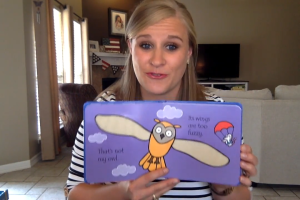
Usborne Thats Not My... Series Board Books (14 Titles)
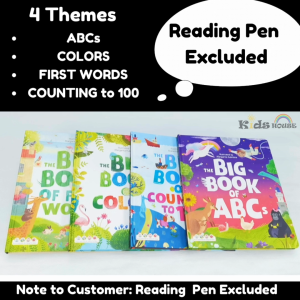
The Big Book of Colors/ Counting/ Words & ABC

24 Festive Drums 24节令鼓 Set | 16 & 18 Inch | Kids & Adults Performance Drum CNY School Event

Lovebird | Beginner Friendly Mid C 12 Hole Ocarina
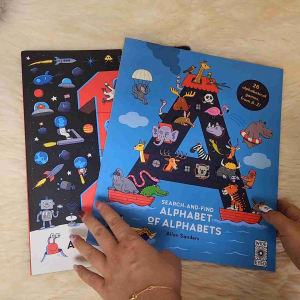
【SG Stock】Search and Find An Alphabet of Alphabets / A Number of Numbers:Big book of A-Z,number games ABC paperback
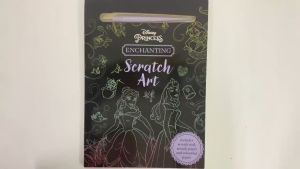
Disney Princess Enchanting Scratch Art Book With Tool For Kids with Activities
Azmina the Gold Glitter Dragon (Dragon Girls #1-16 Optional ) Paperback by Maddy Mara Scholastic Original English books